Early Signs of Blood Cancer: What to Look Out For
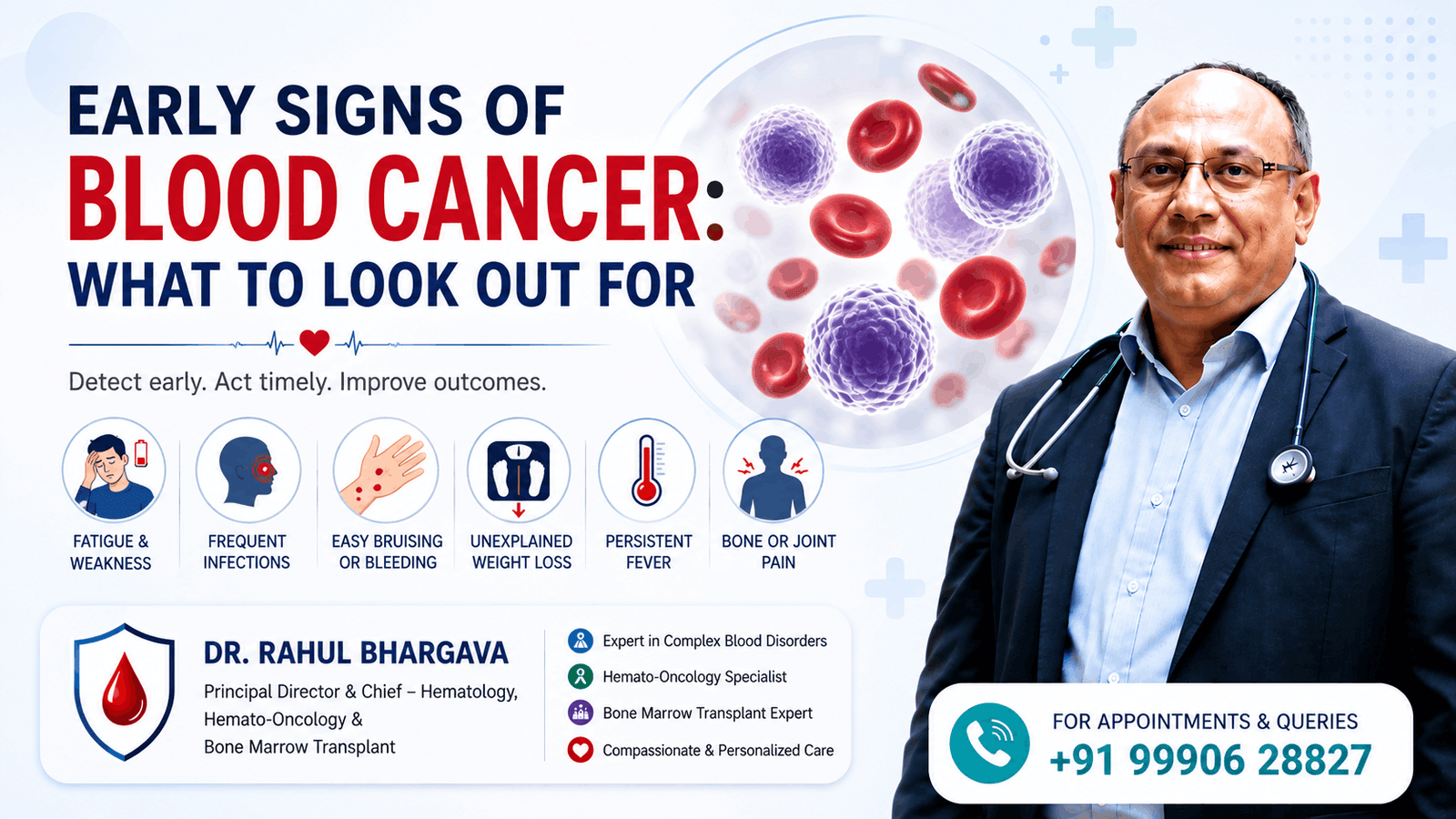
Table of Contents
Blood cancer is not a single disease; it encompasses several different conditions that affect the blood, bone marrow, or lymphatic system. The most common types include leukemia, lymphoma, and multiple myeloma. Each of these conditions can behave differently, and their earliest symptoms may be so subtle that people often mistake them for stress, infection, anemia, or other common health issues.
For patients living outside India who are considering a specialist evaluation or treatment, understanding these warning signs is an important first step.
At Fortis Memorial Research Institute (FMRI) in Gurugram, patients can access specialized services in hematology, hemato-oncology, and bone marrow transplantation. Dr. Rahul Bhargava is the Principal Director and Chief of Hematology, Hemato-Oncology, and Bone Marrow Transplant at Fortis Healthcare, specializing in complex blood disorders, leukemia, lymphoma, and transplantation.
What Is Blood Cancer?
Blood cancer refers to cancers that develop in the blood-forming tissues, bone marrow, blood cells or lymphatic system.
The three broad groups are:
- Leukemia – cancer involving blood-forming cells, usually beginning in the bone marrow.
- Lymphoma – cancer involving lymphocytes, a type of white blood cell.
- Multiple myeloma – cancer of abnormal plasma cells in the bone marrow.
These diseases are distinct and cannot be used interchangeably. For instance, a treatment suitable for one type of leukemia may be ineffective for a specific type of lymphoma. This highlights the importance of accurate diagnosis as the foundation for effective treatment of blood cancers.
Why Blood Cancer Can Be Difficult to Recognize Early
Imagine someone who has been feeling unusually tired for several weeks.
They may blame:
- Long working hours
- Poor sleep
- Stress
- Travel
- A recent infection
- Iron deficiency
- Age
Another person might notice a swollen lymph node and assume it's just a result of a cold. Another may develop bruises and think they must have bumped into something. In many cases, these explanations are entirely reasonable. However, the issue arises when symptoms persist, recur frequently, or appear together.
For example:
Persistent fatigue + frequent fever + unusual bruising
is more concerning than fatigue alone.
Likewise:
Swollen lymph nodes + night sweats + unexplained weight loss
warrants medical assessment.
This does not indicate the person has cancer. It suggests that there is enough evidence to warrant further investigation into what is occurring.
Early Signs of Blood Cancer
1. Unusual or Persistent Fatigue
Everyone gets tired.
The type of fatigue that deserves attention is different. It may feel like your usual energy has disappeared even after sleeping or resting.
You may notice:
- Difficulty completing normal activities
- Weakness while walking or climbing stairs
- Reduced ability to exercise
- Feeling exhausted throughout the day
- Breathlessness with routine activity
- Difficulty concentrating
Blood cancers can disrupt normal blood cell production and may lead to anemia, contributing to fatigue and weakness. However, fatigue is very common and has numerous causes. Therefore, it should be considered a clue rather than a diagnosis.
2. Frequent or Recurrent Infections
White blood cells play a crucial role in the body's immune defense. Certain blood cancers can disrupt the production or normal function of healthy white blood cells.
A person may experience:
- Repeated infections
- Fever that keeps returning
- Infections that take longer to recover from
- Unusual infections
- Increasing need for antibiotics
Recurrent infections can also be caused by diabetes, immune disorders, medications, nutritional deficiencies, and various other conditions. If infections occur frequently, a doctor may suggest a blood count and further investigations.
3. Easy Bruising or Unexpected Bleeding
Have you noticed unexplained bruises appearing on your body?
Or perhaps your gums are bleeding more frequently, and you are experiencing nosebleeds often?
These changes can sometimes happen when platelet production is compromised.
- Bruises appearing without an obvious reason
- Frequent nosebleeds
- Bleeding gums
- Prolonged bleeding from minor cuts
- Heavy menstrual bleeding
- Tiny red or purple spots on the skin, known as petechiae
Leukemia can disrupt platelet production, leading to symptoms such as bleeding or bruising. However, there are also many non-cancerous reasons for unusual bleeding, such as certain medications or platelet disorders. It is crucial to have any unexplained or persistent bleeding thoroughly examined.
4. Repeated or Unexplained Fever
Fever is usually associated with infection, and most fevers are not caused by cancer.
But a fever that keeps coming back without an obvious explanation deserves attention.
Be particularly aware when fever occurs alongside:
- Night sweats
- Weight loss
- Fatigue
- Enlarged lymph nodes
- Recurrent infections
- Abnormal blood counts
Fever can occur in several forms of leukemia and lymphoma.
5. Drenching Night Sweats
There is a big difference between feeling warm at night and waking up with your clothes or bedding soaked in sweat.
Repeated, unexplained night sweats can sometimes occur with lymphoma and certain other blood cancers.
They are more significant when they occur together with:
- Fever
- Weight loss
- Enlarged lymph nodes
- Persistent fatigue
Again, night sweats alone do not mean cancer. Hormonal changes, infections, medications and other conditions can cause them.
6. Unexplained Weight Loss
If you are intentionally dieting or increasing your exercise, weight loss is to be expected. However, the concern arises when weight loss occurs unintentionally and without an obvious explanation. You might notice that your clothes are fitting more loosely, even though your routine hasn't changed. Unexplained weight loss is particularly concerning when it is accompanied by:
- Loss of appetite
- Persistent fever
- Night sweats
- Fatigue
- Enlarged lymph nodes
- Ongoing pain
Lymphoma and some leukemias can cause unexplained weight loss.
7. Swollen Lymph Nodes
A small lump in your neck or under your arm is often caused by an infection. Lymph nodes often enlarge when the immune system is responding to infections. However, a lymph node should be evaluated when it:
- Remains enlarged for an extended period
- Continues growing
- Is painless and unexplained
- Feels unusually firm
- Appears in several locations
- Occurs together with fever, night sweats or weight loss
Lymphoma can present with painless lymph-node enlargement.
The location can vary, including the:
- Neck
- Underarm
- Groin
- Area above the collarbone
Never assume that every swollen lymph node is cancer—but do not ignore one that persists without a clear explanation.
8. Shortness of Breath
Shortness of breath has many possible causes.
It can result from:
- Anemia
- Asthma
- Heart disease
- Lung disease
- Infection
- Anxiety
- Reduced fitness
In blood cancer, the reduced production of healthy red blood cells can lead to anemia and breathlessness. If breathlessness is new, persistent, or worsening, it should be evaluated by a medical professional. Severe breathing difficulties or chest pain require urgent medical attention.
9. Bone or Joint Pain
Persistent bone pain can easily be mistaken for an orthopedic problem.
People may initially think they have:
- Arthritis
- Muscle strain
- Back pain
- Vitamin deficiency
- An old injury
But certain blood cancers can affect the bone marrow and cause bone discomfort.
Bone pain is particularly relevant in conditions such as leukemia and multiple myeloma.
Pay attention to pain that:
- Has no obvious cause
- Persists for weeks
- Keeps getting worse
- Occurs with fatigue or anemia
- Is accompanied by unexplained fractures
10. Loss of Appetite or Unexplained Abdominal Fullness
Some people with blood cancers notice that they are not as hungry as usual.
Others describe a feeling of fullness after eating only a small amount.
This can sometimes occur when the spleen or liver becomes enlarged or when disease affects lymph nodes within the abdomen.
Other associated symptoms may include:
- Weight loss
- Abdominal discomfort
- Fatigue
- Night sweats
- Fever
Persistent abdominal symptoms should be evaluated rather than automatically attributed to indigestion.
Other Symptoms That Should Not Be Ignored
Depending on the type of blood cancer, patients may experience:
- Pale skin
- Dizziness
- Headaches
- Weakness
- Persistent itching
- Recurrent infections
- Abdominal swelling
- Bone pain
- Unusual bleeding
- Persistent fever
- Enlarged lymph nodes
- Reduced appetite
The combination of symptoms is often more informative than any single symptom.
Early Signs of Leukemia
Leukemia begins in blood-forming tissues, particularly the bone marrow. Because the abnormal cells can interfere with normal blood-cell production, patients may develop symptoms related to low red blood cells, abnormal white blood cells or low platelets.
Possible symptoms include:
- Fatigue
- Weakness
- Fever
- Recurrent infections
- Easy bruising
- Bleeding
- Shortness of breath
- Bone pain
- Swollen lymph nodes
- Weight loss
- Abdominal fullness
Some chronic leukemias may produce few symptoms at first and may be discovered unexpectedly during a routine blood test.
That is why an unexplained abnormality in a CBC (complete blood count) should not simply be dismissed.
Early Signs of Lymphoma
Lymphoma begins in lymphocytes.
One of the most recognizable symptoms is persistent, painless swelling of a lymph node.
Patients may also develop:
- Fever
- Drenching night sweats
- Unexplained weight loss
- Fatigue
- Itching
- Abdominal discomfort
- Chest symptoms
- Loss of appetite
The symptoms can differ considerably depending on the lymphoma subtype and the areas of the body involved.
Early Signs of Multiple Myeloma
Multiple myeloma arises from abnormal plasma cells in the bone marrow. Unlike some types of leukemia or lymphoma, the initial symptoms of myeloma can often be confused with common back or bone issues.
Possible signs include:
- Persistent bone pain
- Back pain
- Rib pain
- Fatigue
- Anemia
- Recurrent infections
- Weakness
- Bone fractures
- Kidney-related problems
Some patients have few symptoms initially and are diagnosed after abnormal blood or urine test results.
Does Having These Symptoms Mean You Have Blood Cancer?
No.
This is one of the most important messages for anyone reading about blood cancer online.
Fatigue does not automatically mean leukemia.
A swollen lymph node does not automatically mean lymphoma.
Bruising does not automatically mean a blood disorder.
Weight loss does not automatically mean cancer.
Many common illnesses produce similar symptoms.
The purpose of recognizing warning signs is not to self-diagnose. It is to recognize when professional evaluation may be appropriate.
When Should You See a Hematologist?
You should consider medical evaluation when symptoms are:
Persistent
They continue longer than expected.
Unexplained
There is no obvious reason for them.
Recurrent
They disappear and repeatedly return.
Getting worse
The problem is progressively affecting your daily life.
Occurring together
Several potentially concerning symptoms appear simultaneously.
Associated with abnormal blood tests
An unexplained abnormality in the CBC is particularly important.
For example, a patient with:
low haemoglobin + low platelets + abnormal white blood cells
may need specialist hematology assessment.
How Is Blood Cancer Diagnosed?
There is no single test that can diagnose every blood cancer.
A specialist usually builds the diagnosis step by step.
Complete Blood Count
A CBC is often the starting point.
It measures:
- Hemoglobin
- Red blood cells
- White blood cells
- Platelets
- Hematocrit
- Other red-cell indices
An abnormal result does not automatically indicate cancer, but it can tell the doctor whether additional testing is needed.
Peripheral Blood Smear
A blood sample is examined under a microscope to assess the appearance of blood cells, providing important clues about abnormal cells and blood cell production.
Bone Marrow Examination
A bone marrow aspiration and biopsy may be recommended when leukemia, myeloma, myelodysplastic syndromes or another marrow disorder is suspected.
The test can help determine:
- What cells are present
- Whether abnormal cells are present
- How blood cells are being produced
- The nature of the disease
- Certain disease-specific characteristics
Not every patient with abnormal blood counts needs a bone marrow biopsy.
Flow Cytometry
Flow cytometry can identify proteins present on abnormal blood cells.
It is an important diagnostic tool for several leukemias and lymphomas.
Lymph Node Biopsy
If lymphoma is suspected, doctors may need to examine a sample of the affected lymph node.
This helps determine the exact lymphoma subtype.
Imaging
Depending on the suspected condition, investigations may include:
- Ultrasound
- CT
- MRI
- PET-CT
- X-rays
Imaging helps doctors understand where disease may be located and whether organs or lymph nodes are involved.
Molecular and Genetic Testing
Modern blood cancer treatment is increasingly personalized.
Molecular testing can identify genetic or molecular characteristics that may help:
- Confirm a diagnosis
- Classify disease
- Estimate risk
- Select targeted treatments
- Monitor disease
The exact tests depend on the suspected blood cancer.
Why Accurate Diagnosis Matters
Two patients may both be told they have “blood cancer,” but their treatment can be completely different.
For example:
A patient diagnosed with one type of leukemia may need a specific combination of chemotherapy and targeted therapy. In the case of lymphoma, a patient might require immunotherapy-based treatment. For those with multiple myeloma, a combination of anti-myeloma medications may be necessary, and in some selected cases, stem cell transplantation may be considered. This highlights the importance of obtaining an accurate diagnosis, rather than just identifying the presence of a blood cancer.
Blood Cancer Treatment Options
Treatment depends on:
- Type of blood cancer
- Subtype
- Stage or disease burden
- Molecular characteristics
- Patient's age
- Overall health
- Previous treatment
- Response to therapy
- Transplant eligibility
Treatment may include:
Chemotherapy
Medicines used to destroy or control cancer cells.
Targeted Therapy
Treatment designed to act against particular molecular features of cancer cells.
Immunotherapy
Treatment that uses or strengthens immune responses against cancer.
Radiation Therapy
Used in selected blood cancers, particularly certain lymphomas and specific clinical situations.
CAR-T Cell Therapy
For selected blood cancers, a patient's T cells can be genetically modified to recognize and attack cancer cells.
Stem Cell / Bone Marrow Transplant
For carefully selected patients, hematopoietic stem cell transplantation may offer a potentially curative treatment option.
Not every patient needs all of these treatments.
Dr. Rahul Bhargava: Specialist in Hematology and Bone Marrow Transplant
When a patient receives an abnormal blood report, one of the most crucial decisions is selecting the right specialist. Dr. Rahul Bhargava serves as the Principal Director and Chief of Hematology, Hemato-Oncology, and Bone Marrow Transplantation at Fortis Memorial Research Institute (FMRI) in Gurugram. According to Fortis Healthcare, he holds an MBBS, MD, and DM, and possesses extensive clinical experience in managing complex blood disorders, such as leukemia, lymphoma, and thalassemia.
His areas of clinical expertise include:
- Hematology
- Hemato-oncology
- Leukemia
- Lymphoma
- Complex blood disorders
- Thalassemia
- Bone marrow transplantation
- Stem cell transplantation
For a patient with an unexplained blood abnormality, the value of specialist care is not simply access to another consultation.
It is the opportunity to ask:
What is causing the abnormal blood count?
Is this an infection, nutritional problem, immune disorder or malignancy?
If cancer is present, what exact subtype is it?
Does the patient need transplantation or can the disease be treated another way?
These questions form the basis of a personalized treatment plan.
Fortis Memorial Research Institute, Gurugram
Fortis Memorial Research Institute is a quaternary care hospital located in Gurugram. It offers specialized services in hematology, hemato-oncology, and bone marrow transplantation. These areas are prominently featured as Centres of Excellence at Fortis, with Dr. Rahul Bhargava being a key member of the hematology and BMT team. The hospital’s hematology and BMT services bring together a group of specialists who collaborate in diagnosing and treating complex blood disorders. This multidisciplinary approach is particularly beneficial for international patients, as treatment for blood cancer often requires the expertise of various specialists rather than relying on a single doctor.
A patient's care may involve:
- Hematology
- Hemato-oncology
- Pathology
- Radiology
- Transfusion medicine
- Infectious disease specialists
- Critical care
- Stem cell transplantation
- Molecular diagnostics
Bone Marrow Transplant at Fortis Gurugram
Bone marrow transplantation, also known as hematopoietic stem cell transplantation, is a significant treatment option for certain blood cancers and severe blood disorders. Fortis highlights its FMRI program as part of its bone marrow transplant services, with Dr. Rahul Bhargava serving as the Principal Director and Chief of Hematology, Hemato-Oncology, and Bone Marrow Transplant.
Depending on the disease, transplantation may be considered for conditions such as:
- Acute leukemia
- Certain chronic leukemias
- Lymphoma
- Multiple myeloma
- Aplastic anemia
- Thalassemia
- Sickle cell disease
- Myelodysplastic syndromes
- Other selected blood disorders
The decision is highly individualized.
A transplant is not always the next step after a blood cancer diagnosis. The treating team evaluates disease biology, treatment response, patient fitness, donor availability, and other clinical factors.
Why International Patients Choose India for Blood Cancer Treatment
Receiving a diagnosis of blood cancer can be overwhelming, no matter where you are in the world. For international patients, an additional challenge arises: where should they seek treatment? Many patients consider India due to its availability of specialized doctors, advanced tertiary-care hospitals, and cutting-edge diagnostic and treatment programs. However, it's important to remember that the decision about which country to choose for treatment should not be based solely on cost.
For complex blood cancers, patients should look at:
- Specialist experience
- Diagnostic capabilities
- Transplant infrastructure
- Infection-control protocols
- Blood bank support
- Intensive care facilities
- Availability of molecular testing
- Multidisciplinary expertise
- Follow-up arrangements
Fortis highlights FMRI’s specialized Centers of Excellence, including hematology, hemato-oncology, and bone marrow transplantation, as well as other major specialties.
How International Patients Can Plan Treatment in India
Patients from Africa, the Middle East, Central Asia, Southeast Asia, and other regions can begin the process from their home country.
Step 1: Collect Your Medical Records
Send copies of:
- CBC reports
- Blood test results
- Bone marrow reports
- Biopsy reports
- PET-CT/CT/MRI reports
- Flow cytometry
- Immunohistochemistry
- Molecular reports
- Previous treatment records
- Current medication list
The more complete the medical history, the easier it is for the specialist to understand the case.
Step 2: Obtain a Specialist Opinion
The medical team reviews the available information and determines whether further investigations are required.
In some cases, an overseas patient may already have a diagnosis.
In others, the diagnosis may still be uncertain.
Both situations require a different approach.
Step 3: Prepare a Treatment Plan
Once the diagnosis is established, the specialist can discuss possible treatment options.
This may include:
- Chemotherapy
- Targeted therapy
- Immunotherapy
- Radiation
- CAR-T therapy for selected indications
- Stem cell transplantation
Step 4: Coordinate the Hospital Visit
International patients can then arrange:
- Specialist consultation
- Diagnostic testing
- Hospital admission if required
- Treatment scheduling
- Accommodation
- Local transportation
Medical travel facilitators can assist with coordination, but the treatment plan should always come from the treating medical team.
Step 5: Plan Follow-Up Before Returning Home
For international patients, follow-up should be discussed before leaving India.
Ask the treating team:
- Which tests are needed after treatment?
- How frequently should they be performed?
- Which symptoms require urgent attention?
- Which medicines should continue?
- Who should review follow-up reports?
A clear follow-up plan makes the transition back home much easier.
Blood Cancer Treatment Cost in India
There is no universal price for blood cancer treatment. The cost depends on the diagnosis and treatment pathway.
Expenses may include:
| Treatment Component | May Affect Total Cost |
|---|---|
| Specialist consultation | Yes |
| Blood tests | Yes |
| Bone marrow biopsy | Yes |
| Flow cytometry | Yes |
| Molecular testing | Yes |
| PET-CT / CT / MRI | Yes |
| Biopsy and pathology | Yes |
| Chemotherapy | Yes |
| Targeted therapy | Yes |
| Immunotherapy | Yes |
| CAR-T therapy | For selected patients |
| Blood transfusions | When required |
| Hospitalization | Depending on treatment |
| Stem cell collection | For transplant patients |
| Bone marrow transplant | Depending on indication |
| Follow-up treatment | Yes |
For international patients, a personalized estimate should be prepared after reviewing medical reports. It's important not to choose a hospital solely based on a low treatment price mentioned in an online article. The cost of blood cancer treatment can vary significantly depending on the exact diagnosis, any complications, and the patient's response to treatment.
Is Blood Cancer Curable?
This is one of the first questions patients and families ask.
The honest answer is:
It depends.
Some blood cancers can potentially be cured.
Some can be controlled for many years.
Others may require long-term treatment and monitoring.
The outcome depends on:
- Disease type
- Stage
- Molecular characteristics
- Patient age
- Overall health
- Response to treatment
- Risk category
- Whether the disease has relapsed
Modern hematology has changed the outlook for many blood cancer patients, with newer targeted medicines, immunotherapies, cellular therapies and transplantation expanding treatment options.
But no responsible doctor should promise a cure without first understanding the individual patient's diagnosis.
Blood Cancer Does Not Always Mean Bone Marrow Transplant
This is another common misconception.
A patient may be diagnosed with leukemia, lymphoma or myeloma and immediately assume that a transplant is unavoidable.
That is not necessarily true.
Some patients achieve excellent disease control using medicines alone.
Others may benefit from transplantation because of the biology of their disease or their response to initial treatment.
The decision is made after assessing the complete clinical picture.
Questions International Patients Should Ask the Doctor
If you are travelling to India for a blood cancer consultation, prepare questions in advance.
About diagnosis
- What exactly is my diagnosis?
- What subtype of blood cancer do I have?
- Has the diagnosis been confirmed by pathology or molecular testing?
- Do I need a bone marrow biopsy?
- Do I need additional genetic testing?
About treatment
- What treatment do you recommend?
- Are there alternative treatment options?
- Is chemotherapy necessary?
- Would targeted therapy or immunotherapy be appropriate?
- Do I need a stem cell transplant?
About transplantation
- Am I eligible for a transplant?
- Do I need a matched donor?
- Could a haploidentical transplant be considered?
- What are the major risks?
- How long might I need to remain in India?
About follow-up
- What tests will I need after treatment?
- How often will I need follow-up?
- Can follow-up be coordinated with a doctor in my home country?
These questions can make a difficult medical journey easier to understand.
Final Thoughts: Don't Ignore a Pattern
Blood cancer does not always announce itself clearly.
Sometimes it begins with a routine blood test.
Sometimes it starts with fatigue that refuses to go away.
Sometimes there is a swollen lymph node that does not disappear.
Sometimes the first clue is repeated fever, unexplained bruising or unexpected weight loss.
One symptom does not mean cancer. A pattern that persists deserves attention.
If you or someone in your family has unexplained blood abnormalities or several persistent symptoms, the next step should be a proper medical evaluation—not internet self-diagnosis.
For patients seeking specialized care for blood cancers, Dr. Rahul Bhargava and his team in hematology, hemato-oncology, and bone marrow transplantation at Fortis Memorial Research Institute (FMRI) in Gurugram provide expert care for complex blood disorders and transplant-related conditions. Dr. Bhargava serves as the Principal Director and Chief of these services at FMRI Gurugram.
International patients can start their journey from home by sharing their existing medical reports for a specialist review. This initial assessment can help determine if additional testing is necessary and whether traveling to India is appropriate for the patient's specific condition.
The sooner an unexplained health issue is thoroughly investigated, the quicker you can transition from uncertainty to a clear diagnosis and an effective treatment plan.
Medical Disclaimer
This article is for educational purposes only and should not be considered a diagnosis or substitute for medical consultation. Symptoms discussed here can have many causes other than cancer. Anyone experiencing persistent, worsening or unexplained symptoms should consult a qualified healthcare professional. Severe bleeding, severe breathing difficulty, chest pain, fainting or rapid deterioration requires urgent medical attention.
Frequently Asked Questions
The early signs of blood cancer include fatigue, frequent infections, unexplained bruising, weight loss, and swollen lymph nodes
Yes, persistent fever and night sweats are common early symptoms of blood cancer, especially in leukemia and lymphoma.
You should get tested if symptoms of blood cancer such as fatigue, abnormal bleeding, or swollen lymph nodes last longer than 2–3 weeks.
Yes. Leukemia symptoms often include bruising and infections; lymphoma symptoms include swollen nodes; myeloma symptoms include bone pain.
Absolutely — early detection of blood cancer significantly improves treatment success and long-term survival outcomes.