How Targeted Small Molecule Therapies Are Changing Blood Cancer Treatment in 2026
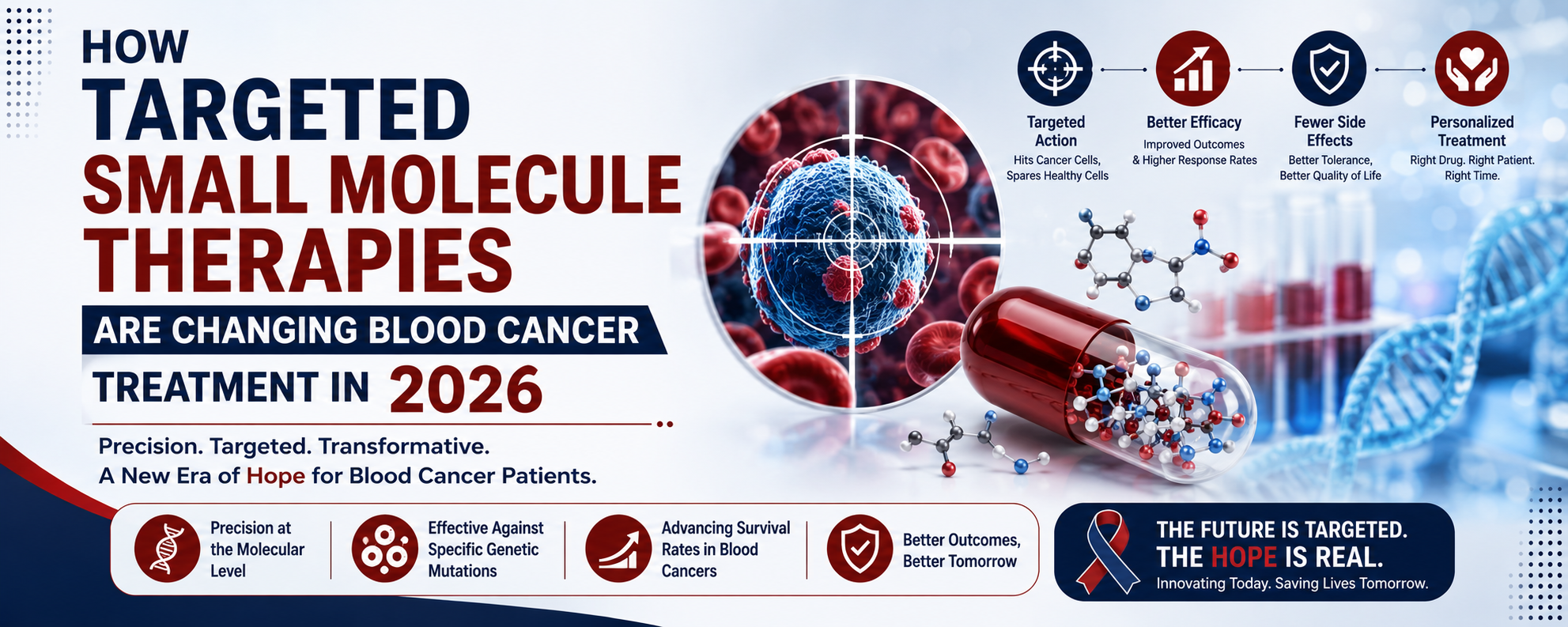
Table of Contents
The treatment of blood cancers has evolved dramatically over the past decade. What was once dominated by high-dose chemotherapy and prolonged hospital stays is now being replaced by precision-driven, molecularly targeted therapies. In 2026, targeted small molecule therapies are at the forefront of hematology innovation — offering better survival, fewer side effects, and highly personalized treatment strategies.
Under the guidance of leading hematologists like Dr. Rahul Bhargava, patients today benefit from therapies designed not just to treat cancer, but to attack it at its biological core.
Let’s explore how these therapies are reshaping blood cancer care in 2026.
Understanding Targeted Small Molecule Therapy
Targeted small molecules are drugs designed to interfere with specific proteins or signaling pathways that cancer cells rely on for growth and survival.
Unlike traditional chemotherapy — which kills rapidly dividing cells indiscriminately — targeted therapies:
- Act on specific genetic mutations
- Block cancer-promoting enzymes
- Interrupt abnormal signaling pathways
- Induce cancer cell death (apoptosis)
- Spare most healthy cells
These drugs are usually oral medications, making treatment more convenient and less disruptive to daily life.
The Science Behind Precision Medicine
In 2026, treatment begins with molecular testing.
Modern hematology now relies heavily on:
- Next-Generation Sequencing (NGS)
- Cytogenetic analysis
- Mutation profiling
- Minimal Residual Disease (MRD) monitoring
This allows doctors to identify specific mutations such as:
- FLT3
- IDH1 / IDH2
- BCL-2
- BTK
- JAK2
- TP53
- Menin pathway alterations
Instead of asking, “What type of leukemia is this?”
We now ask, “What mutation is driving this leukemia?”
This shift from disease-based to mutation-based therapy is what defines modern hematologic oncology.
Major Targeted Small Molecules Transforming Treatment in 2026
BCL-2 Inhibitors: Forcing Cancer Cells to Self-Destruct
BCL-2 proteins prevent cancer cells from undergoing apoptosis. By blocking this pathway, drugs like venetoclax:
- Force leukemia cells into programmed cell death
- Achieve deep molecular remissions
- Work effectively in elderly patients
- Reduce the need for aggressive chemotherapy
Venetoclax-based combinations are now frontline therapy in many Acute Myeloid Leukemia (AML) cases — especially in patients who are unfit for intensive chemotherapy
FLT3 & IDH Inhibitors in Acute Myeloid Leukemia (AML)
AML is no longer treated uniformly.
Patients with:
- FLT3 mutations receive FLT3 inhibitors
- IDH1/2 mutations receive IDH inhibitors
These therapies:
- Improve remission rates
- Reduce relapse
- Provide options for relapsed or refractory disease
- Allow bridge-to-transplant strategies
In 2026, combining targeted inhibitors with hypomethylating agents has significantly improved outcomes in AML.
BTK Inhibitors in CLL and Lymphomas
Bruton Tyrosine Kinase (BTK) inhibitors have revolutionized the treatment of Chronic Lymphocytic Leukemia (CLL) and certain lymphomas.
Benefits include:
- Oral therapy instead of IV chemotherapy
- Long-term disease control
- Better tolerance in elderly patients
- Reduced hospitalization
Second-generation BTK inhibitors now have improved safety profiles with fewer cardiac side effects.
JAK Inhibitors in Myeloproliferative Disorders
In diseases like myelofibrosis and polycythemia vera, JAK pathway activation drives abnormal blood cell production.
JAK inhibitors:
- Reduce spleen size
- Improve constitutional symptoms
- Enhance quality of life
- Delay disease progression
These therapies have transformed symptom management and survival expectations.
Menin Inhibitors – A Breakthrough for High-Risk Leukemia
Menin inhibitors represent one of the most promising advances in 2026.
They are particularly effective in:
- KMT2A-rearranged AML
- NPM1-mutated AML
These drugs:
- Restore normal differentiation of leukemic cells
- Target aggressive disease subtypes
- Offer hope in relapsed and refractory cases
This area is rapidly evolving and may redefine high-risk AML management.
The Power of Combination Therapy
Perhaps the most important advancement is the strategic combination of targeted drugs.
Modern regimens now combine:
- BCL-2 inhibitors + Hypomethylating agents
- BTK inhibitors + BCL-2 inhibitors
- Targeted drugs + Monoclonal antibodies
- Targeted therapy + Stem Cell Transplant
Why combinations work better:
- Attack multiple survival pathways
- Reduce drug resistance
- Achieve deeper molecular remission
- Improve overall survival
This approach has significantly reduced reliance on high-dose chemotherapy in many patients.
Reduced Toxicity: A Major Advantage
One of the greatest benefits of targeted therapy is improved tolerability.
Compared to traditional chemotherapy, targeted drugs typically cause:
- Less hair loss
- Fewer severe infections
- Reduced nausea and vomiting
- Shorter hospital stays
- Lower organ toxicity
This is especially important for elderly patients, who form a large proportion of blood cancer cases.
Minimal Residual Disease (MRD): Monitoring Treatment Success
In 2026, treatment success is not judged only by remission under the microscope.
MRD testing allows detection of:
- One cancer cell among 10,000–100,000 healthy cells
Achieving MRD negativity:
- Predicts longer survival
- Reduces relapse risk
- Guides duration of therapy
Targeted small molecule combinations are increasingly capable of achieving MRD-negative remissions.
Are We Moving Away from Chemotherapy?
Not completely — but chemotherapy is no longer the only pillar.
In many blood cancers:
- Chemotherapy intensity has reduced
- Targeted drugs are frontline
- Maintenance therapy is mutation-guided
- Transplant decisions are personalized
The future model is integration — not elimination — of therapies.
Challenges That Still Remain
Despite remarkable progress, challenges include:
- Development of drug resistance
- Long-term safety data still maturing
- Cost considerations
- Need for ongoing molecular monitoring
However, research is continuously improving sequencing strategies and developing next-generation inhibitors.
What This Means for Patients in 2026
For patients diagnosed today:
- More precise treatment options
- Better survival rates
- Improved quality of life
- Fewer hospital admissions
- Longer remission duration
Many blood cancers are increasingly managed as chronic, controllable conditions rather than immediately life-threatening diseases.
The Role of Expert Care
Advanced therapies require:
- Accurate molecular diagnosis
- Careful drug selection
- Side-effect monitoring
- Personalized treatment planning
Specialists like Dr. Rahul Bhargava integrate cutting-edge molecular diagnostics with evidence-based targeted therapy protocols, ensuring patients receive globally aligned treatment standards.
The Future of Targeted Therapy Beyond 2026
The next frontier includes:
- Triple-drug targeted combinations
- Resistance pathway blockers
- Oral MRD-guided therapy duration
- Personalized drug sequencing
- Integration with CAR-T and cellular therapies
Hematology is now entering a precision era where therapy is designed not just for the disease — but for the individual patient’s biology.
Conclusion
Targeted small molecule therapies have fundamentally transformed blood cancer treatment in 2026.
By shifting from broad chemotherapy to mutation-driven precision medicine, hematology has entered a new age — one defined by personalization, improved survival, and better quality of life.
The question is no longer whether targeted therapy works.
The question now is how to optimize it for each patient.
And that is where modern hematology continues to evolve
Frequently Asked Questions
Targeted small molecule therapies are advanced medicines that block specific proteins or genetic mutations responsible for cancer growth. Unlike traditional chemotherapy, these drugs focus only on cancer-driving pathways, making treatment more precise and often less toxic.
Chemotherapy kills all rapidly dividing cells — both cancerous and healthy.
Targeted therapies:
-
Act only on specific cancer mutations
-
Cause fewer side effects
-
Often come in oral form
-
Allow more personalized treatment
In many cases, targeted drugs have reduced the need for aggressive chemotherapy.
Targeted therapies are used in:
-
Acute Myeloid Leukemia (AML)
-
Chronic Lymphocytic Leukemia (CLL)
-
Multiple Myeloma
-
Lymphomas
-
Myelofibrosis
-
Polycythemia Vera
-
Certain high-risk genetic subtypes of leukemia
Treatment depends on molecular testing results.
In general, targeted therapies are better tolerated than traditional chemotherapy. Patients may experience:
-
Less hair loss
-
Reduced nausea
-
Fewer infections
-
Shorter hospital stays
However, they can still have side effects and require careful medical monitoring.
Many targeted small molecule therapies are oral medications taken at home. Some may be combined with injectable drugs depending on the treatment protocol.
This convenience significantly improves patient comfort and quality of life.